
10 Exhibitions That Defined Computer Art History

Most computer art wasn’t made for galleries. It was created in research labs, university computing centres, and corporate facilities where artists had borrowed access to machines that cost millions of dollars. The work existed as printouts, punch cards, oscilloscope photographs, and plotter drawings—formats that didn’t fit traditional art world structures.
Exhibitions changed that. They brought computational aesthetics into public view, forced critics to engage with machine-made imagery, and established that computers could be creative tools, not just calculating devices.
These ten exhibitions didn’t just show computer art—they defined what computer art could be, shaped how institutions understood it, and created the conditions for a market to eventually develop. Understanding them helps you recognize what’s historically important versus what’s merely available.
---
1. Computergrafik — Stuttgart, February 1965
Venue: Studiengalerie, Technische Hochschule Stuttgart
Curator: Georg Nees (artist), Max Bense (philosopher)
Artists: Georg Nees
What Made It Historic: This was the first public exhibition of computer-generated art anywhere in the world. Georg Nees, a mathematics student, showed plotter drawings generated by algorithms he’d written. The exhibition lasted only a few days but represented a conceptual breakthrough—the idea that machines could make images worth exhibiting.
Max Bense, a philosopher of information aesthetics, provided theoretical justification. His writings positioned computer graphics within broader questions about art, information, and perception. This wasn’t just an engineering demonstration—it was framed as an aesthetic problem.
Why It Mattered to the Market: Established the earliest provenance for computer art. Works shown here (if they survived) have unquestionable historical importance. Set the template: serious computer art needed both technical sophistication and theoretical framework.
Current Impact: Nees’s early works rarely appear for sale. When they do, the Stuttgart 1965 exhibition history adds significant value. Museums building computer art collections specifically seek works with this provenance.
---
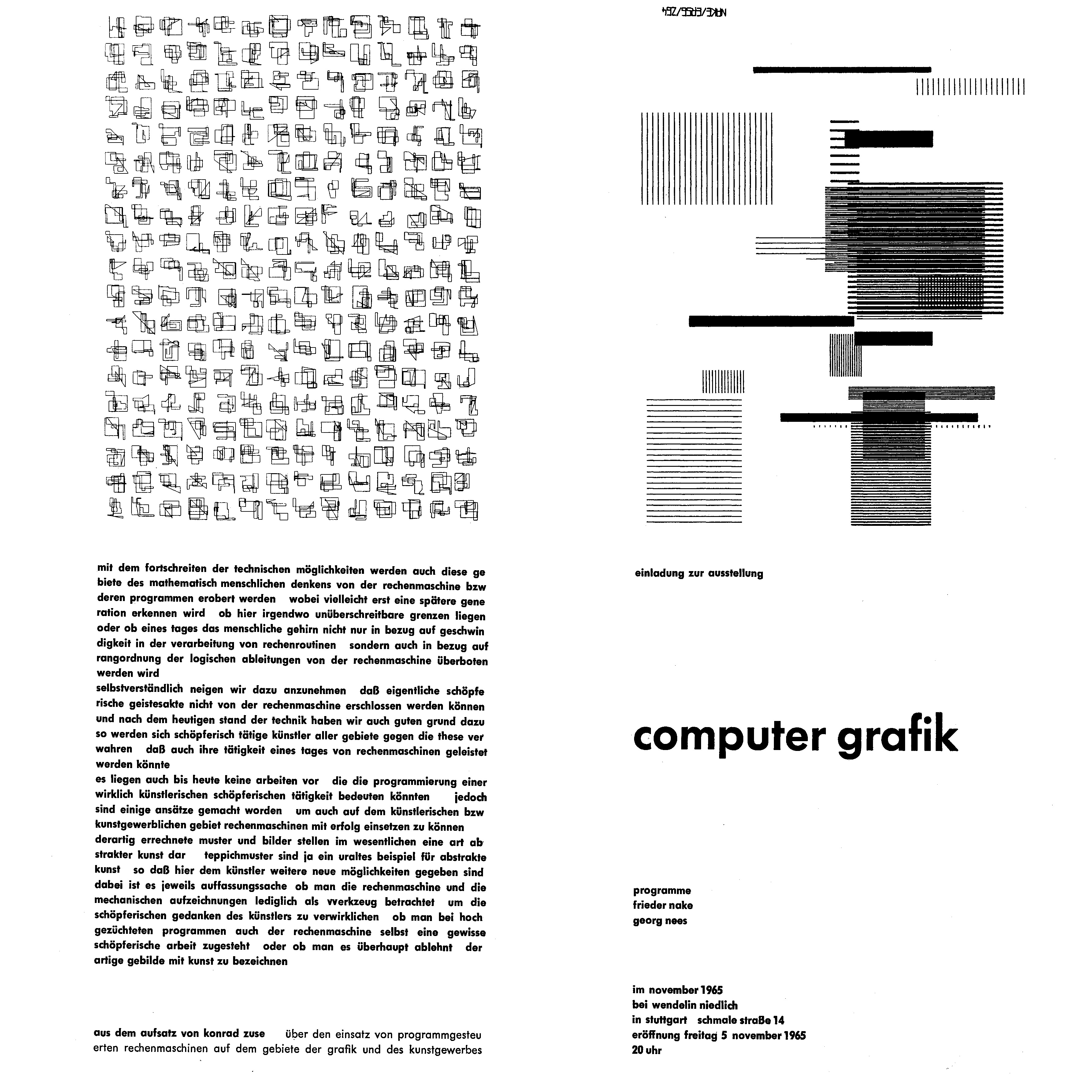
2. Frieder Nake & Georg Nees — Stuttgart and Wendelin Niedlich Gallery, November 1965
Venue: Studiengalerie + Galerie Wendelin Niedlich, Stuttgart
Curator: Max Bense
Artists: Frieder Nake, Georg Nees
What Made It Historic: This was the first commercial gallery exhibition of computer art. While Nees’s February show was in a university space, the November dual exhibitions brought computational aesthetics to the commercial art world.
Frieder Nake, another Stuttgart student, joined Nees. Their works engaged directly with art history—Nake’s “Hommage à Paul Klee” series demonstrated that computers could reference and reinterpret canonical modernist aesthetics. This answered critics who claimed computers couldn’t make “real” art.
Why It Mattered to the Market: Introduced the commercial gallery system to computer art. The Niedlich Gallery exhibitions established that this work could be bought and sold like traditional art. Price: 400 Deutsche Marks for a plotter drawing.
Current Impact: Works from these exhibitions are extremely rare. Both Nake and Nees are now recognized as absolute pioneers. Their 1965 output establishes the template for what early computer art looks like and what it’s worth.
---
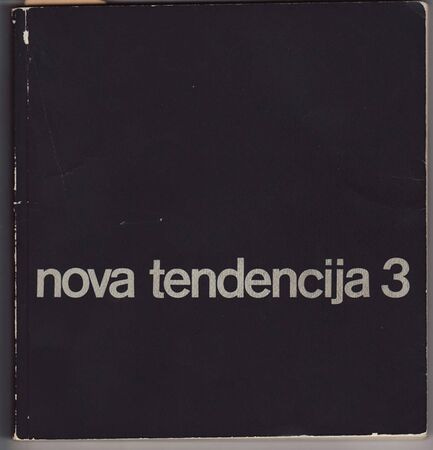
cover of the New Tendencies Catalog from 1965
3. New Tendencies 3 — Zagreb, August 1965
Venue: Galerija suvremene umjetnosti, Zagreb
Curators: Almir Mavignier, Matko Meštrović, Boris Kelemen
Artists: International kinetic and programmed art movement
What Made It Historic: While not exclusively computer art, this exhibition positioned computational aesthetics within the broader New Tendencies movement—artists using systematic, programmed approaches to art-making. Zagreb became a meeting point for Eastern and Western artists during the Cold War.
The exhibition demonstrated that computer-adjacent thinking (algorithms, systems, programs) was happening across Europe, not just in Western tech centers. It connected kinetic art, Op Art, and early computational work into a coherent movement.
Why It Mattered to the Market: Established Zagreb as a center for computational aesthetics. Works shown at New Tendencies exhibitions have institutional importance. Created network that led to Tendencies 4 (1968-69), the first major computer art festival.
Current Impact: Institutions collecting New Tendencies material are paying premium prices. The movement is being reassessed as equally important to Western computer art centers. Works with NT3 exhibition history are increasingly valuable.
---

Cybernetic Serendipity exhibition poster
4. Cybernetic Serendipity— London, August 1968 - October 1968
Venue: Institute of Contemporary Arts (ICA), London
Curator: Jasia Reichardt
Artists: 130+ artists, composers, engineers, poets including Nam June Paik, John Cage, Wen-Ying Tsai, Charles Csuri, Frieder Nake, Georg Nees, A. Michael Noll
What Made It Historic: This was the exhibition that brought computer art to mass public consciousness. Over 60,000 visitors saw computational creativity presented as a coherent artistic movement, not scattered experiments.
Jasia Reichardt’s curatorial vision was expansive: computer graphics, computer-generated music, computer poetry, cybernetic sculptures, robots. The exhibition argued that computation was transforming all creative practices, not just visual art.

Documentation from Cybernetic Serendipity at the ICA in London
Why It Mattered to the Market: Created the canon. Artists included in Cybernetic Serendipity are now considered historically essential. The exhibition catalogue became a foundational text—everyone building computer art collections references it.
Current Impact: “Exhibited at Cybernetic Serendipity” adds 30-50% to value. The 2018 ICA exhibition “Cybernetic Serendipity Reimagined” renewed interest. Works with this provenance are museum-priority acquisitions.
---
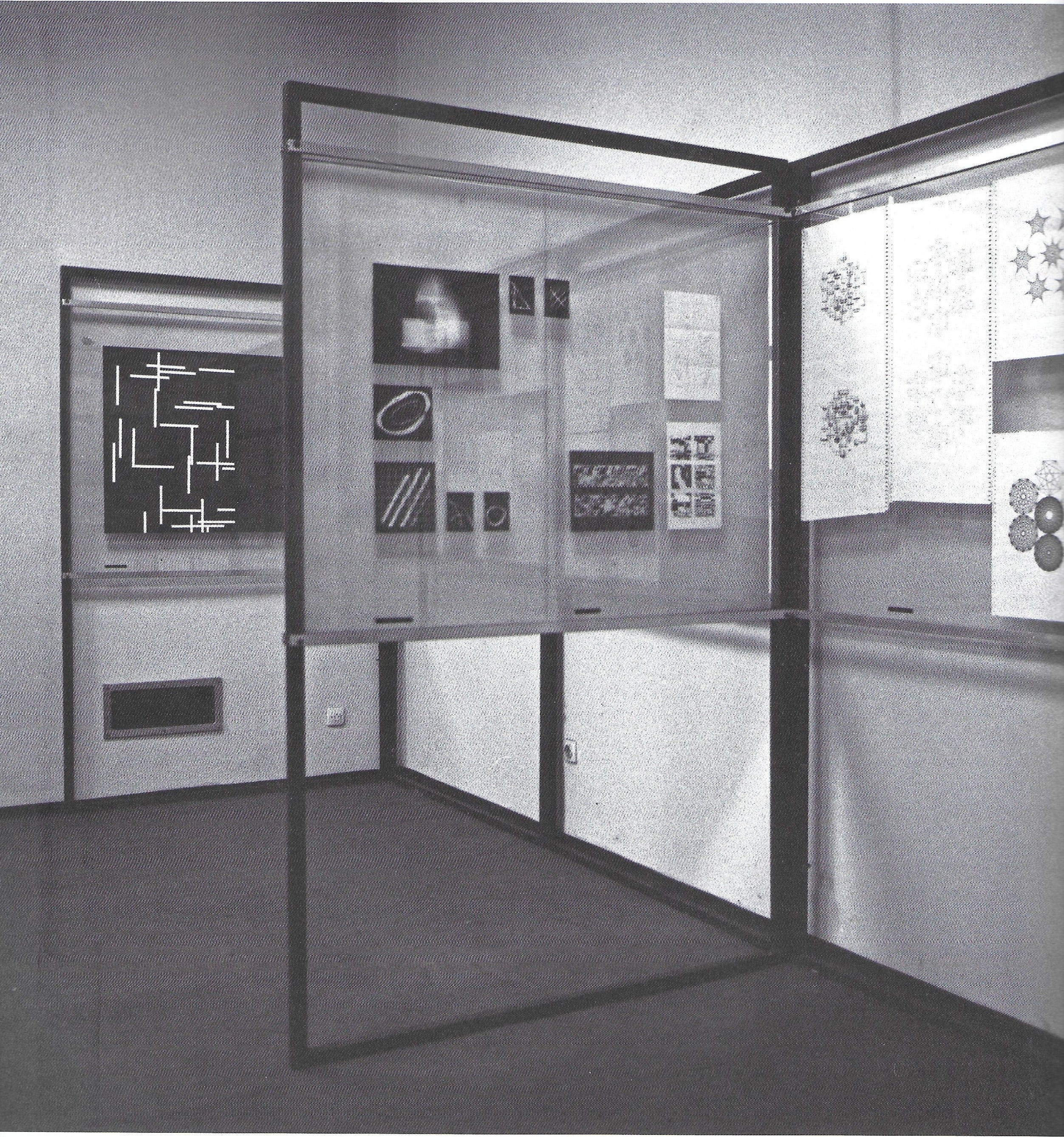
Works by Bonacic in NT 4
5. Tendencies 4: Computers and Visual Research — Zagreb, August 1968 - January 1969
Venue: Galerija suvremene umjetnosti, Zagreb
Curators: Boris Kelemen, Radoslav Putar, Matko Meštrović
Artists: Vladimir Bonačić, Frieder Nake, Georg Nees, A. Michael Noll, CTG (Computer Technique Group, Japan), Zdeněk Sýkora
What Made It Historic: This was the first major international festival specifically dedicated to computer art. It included an exhibition, a symposium, and the installation of computer-controlled public art (Bonačić’s light installations on Zagreb building facades).
The exhibition and symposium happened simultaneously with Cybernetic Serendipity in London, but Tendencies 4 went further—it presented computer art as a movement with theoretical coherence and social purpose, not just technological novelty.
Why It Mattered to the Market: Established Zagreb/New Tendencies alongside London as a co-equal origin point for computer art. Works from this exhibition have institutional importance. The Eastern European connection means some T4 works remain undervalued—opportunity for collectors.
Current Impact: MoMA’s 2019 “Thinking Machines” exhibition repositioned Tendencies 4 as historically central. Bonačić works from this show are being actively acquired. Market correction happening now.
---
6. Software — Information Technology: Its New Meaning for Art — New York, September 1970
Venue:Jewish Museum, New York
Curator: Jack Burnham
Artists: Hans Haacke, Les Levine, Sonia Sheridan, Nicholas Negroponte
What Made It Historic: Jack Burnham’s exhibition argued that software—not hardware—was the important artistic medium. This shifted focus from computer graphics to systems, processes, and conceptual frameworks.
The exhibition included artists who weren’t using computers at all but were thinking computationally. It connected computer art to broader conceptual art movements, systems aesthetics, and information theory.
Why It Mattered to the Market: Expanded what “computer art” meant beyond pretty pictures. Established that process documentation, system descriptions, and conceptual frameworks were collectible. This laid groundwork for contemporary concerns with code-as-art.
Current Impact: Artists from this exhibition (Hans Haacke especially) have strong markets. The conceptual computer art from “Software” is being reassessed as institutions build digital art programs. Process documentation and system diagrams gaining value.
---
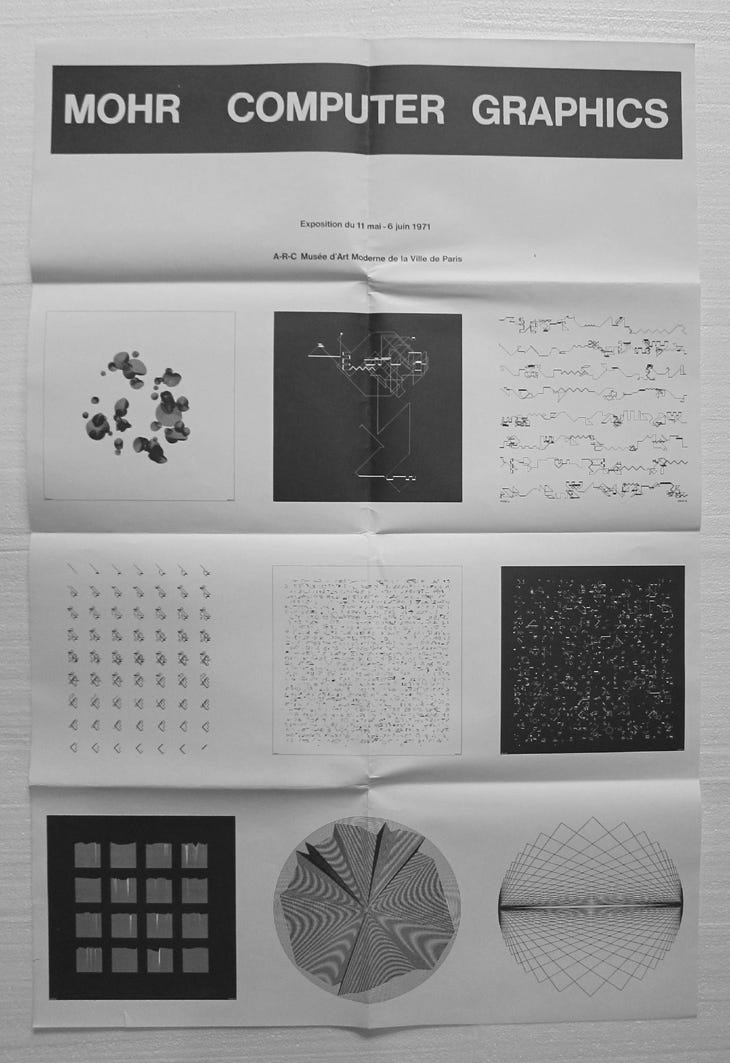
The poster from Manfred Mohr’s exhibition in Paris, 1971
7. Manfred Mohr “Une Esthétique Programmée” & The Rise of French Computer Art — Paris, May - June 1971 / November - December 1972
Venue: ARC - Musée d’Art Moderne de la Ville de Paris (1971) / Galerie Weiller, Paris (1972)
Curator: Pierre Gaudibert (Mohr) / GAIV collective (Galerie Weiller)
Artists: Manfred Mohr (1971); Hervé Huitric, Monique Nahas, Jean-Claude Marquette, Jean-Claude Halgand, Fanie and Jacques Dupré, Patrick Greussay, Jacques Arveiller (1972)
What Made It Historic: These two exhibitions—separated by just 18 months—established Paris as a center for computer art on equal footing with Stuttgart and London, but with distinctly French characteristics: institutional validation, collaborative practice, and technical innovation in color.
Manfred Mohr’s “Une Esthétique Programmée” at the ARC in May-June 1971 was the first solo museum exhibition of computer art anywhere in the world. While Nees and Nake had shown in university galleries and commercial spaces, Mohr’s show brought algorithmic aesthetics into a major municipal museum with full institutional backing. Pierre Gaudibert, a significant figure in French contemporary art, curated the exhibition—positioning computer graphics within serious aesthetic discourse rather than technological demonstration.
Mohr’s work engaged with geometry, systematic reduction, and rule-based generation in ways that connected computer art to minimalism and conceptual art. His algorithmic rigor demonstrated that computers could be tools for investigating fundamental aesthetic questions, not just producing novel images.
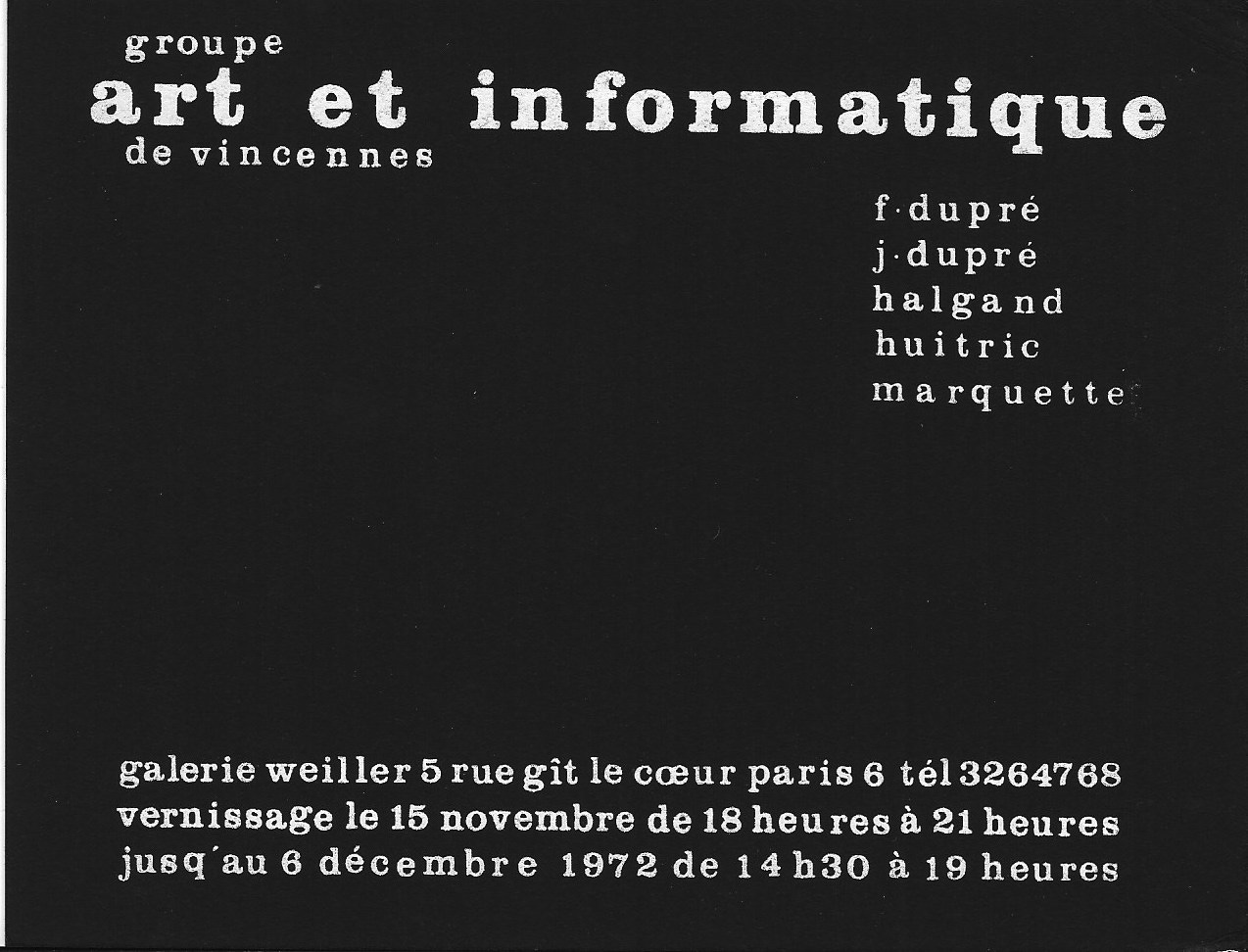
The invitation card for the first gallery exhibition of GAIV
A collaboratively significant development was GAIV—the Groupe Art et Informatique de Vincennes. Founded in 1969 at the experimental University of Vincennes (Paris VIII), GAIV brought together visual artists, musicians, architects, and programmers around shared computational tools and collective practice. Their exhibition at Galerie Weiller in November-December 1972 represented a fundamentally different model from the German and American pioneers.
What distinguished GAIV was color. At a time when most computer art remained limited to black-and-white plotter drawings, GAIV developed programs for generating and manipulating color images on a French CAE-510 computer with just 16KB of memory. This wasn’t just aesthetic preference—it was a technical achievement that placed French computer art at the forefront of computational color theory.
The Nahas-Huitric color experiments used computers to analyze and transform photographic images, treating color as data to be systematically manipulated. Jean-Claude Marquette developed programs for linguistic transformations, connecting computer art to French structuralist and semiotic theory. The collaborative works demonstrated that computational creativity didn’t require individual genius—shared code, shared techniques, and shared theoretical frameworks could produce collective aesthetic production.
The Galerie Weiller exhibition came at a crucial moment. GAIV had already participated in the landmark “Computers and Visual Research” colloquium in Zagreb (1971) and would go on to show at New Tendencies 5 (1973). But the Paris commercial gallery exhibition established their work within the French contemporary art market, not merely as technical experiments or academic exercises.
Why It Mattered to the Market: Mohr’s ARC exhibition demonstrated institutional validation—museums would acquire and exhibit computer art as legitimate contemporary practice. GAIV’s Galerie Weiller show proved commercial viability—collectors would buy it, galleries would represent it, and pricing structures could be established.
More fundamentally, these exhibitions validated two different approaches: Mohr’s individual algorithmic investigation and GAIV’s collective computational exploration. While Stuttgart emphasized systematic aesthetics and London emphasized technological novelty, Paris offered institutional seriousness combined with collaborative practice.
The French model influenced how European museums approached computer art acquisition. Instead of treating it as a subcategory of technology art or graphic design, institutions recognized computer art as part of contemporary art discourse—connected to minimalism, conceptualism, and structuralism.
Current Impact:Mohr’s market has strengthened significantly, with works from the 1971 ARC period commanding premium prices. But GAIV artists remain dramatically undervalued relative to their historical importance. Works by the Nahas-Huitric partnership, Jean-Claude Marquette’s linguistic pieces, and collaborative GAIV productions represent exceptional opportunities for collectors who understand French computer art history.
The 2023 Centre Pompidou publication “Le Groupe art et informatique de Vincennes (GAIV): Une esthétique programmative” has renewed institutional interest. Museums building comprehensive computer art collections now recognize they need GAIV representation—and Galerie Weiller provenance adds significant value. The color innovation alone makes GAIV technically and aesthetically distinct from the overwhelmingly monochromatic output of Stuttgart and early Bell Labs work.
---
8. 35th Venice Biennale— Venice, June - October 1970
Venue: Various pavilions, Venice, Italy
Artists included: Herbert W. Franke (German Pavilion), plus broader international representation
What Made It Historic: The Venice Biennale, founded in 1895, is one of the world’s most prestigious international art exhibitions. The 1970 edition (the 35th Biennale) represented the first time computer-generated art appeared in this elite international context. Herbert W. Franke’s “Quadrate” serigraph—created from algorithms developed in 1968-69 on an IBM 1130—was shown in the German Pavilion as part of a series by Werkstatt-Edition Kroll.
While computer art had been shown in specialized contexts (Stuttgart, ICA London, Zagreb), the Venice Biennale represented validation by the traditional art establishment. Being selected for a national pavilion at Venice signaled that computer-generated work could compete for attention and legitimacy alongside painting, sculpture, and traditional media at the highest levels of the international art world.
Franke’s “Quadrate” program was significant technically and aesthetically. Working with computer scientist Georg Färber, Franke created algorithms that distributed squares across three planes using pseudo-random generators within defined parameters. The interplay between mathematical structure and computational randomness became a leitmotif of his work. For the Venice presentation, Franke chose a striking neon color scheme of orange-pink-black, demonstrating that computer art could engage with color theory and visual impact, not just systematic geometry.
The 1970 Biennale also featured architectural projects exploring computer-aided design, connecting computational aesthetics to broader questions about technology’s role in creative practice across disciplines.
Why It Mattered to the Market: Venice Biennale representation is among the most prestigious exhibition credentials an artist can have. “Shown at Venice Biennale 1970” establishes computer art within the canon of internationally recognized contemporary art, not as a technological curiosity but as legitimate aesthetic production worthy of museum acquisition and serious collecting.
The Biennale context meant computer art was being evaluated by traditional art world standards—composition, color, visual impact, conceptual rigor—rather than purely technological novelty. This forced the market to consider computer-generated work on the same terms as any other contemporary art practice.
Current Impact: Computer art with Venice Biennale provenance commands premium prices. Institutions building comprehensive 20th-century collections recognize Venice representation as validation of historical importance. Franke’s works from this period are increasingly valuable as museums reassess early computer art pioneers. The 1970 Biennale appearance establishes Franke as not just a technical innovator but an artist whose work competed successfully in the most elite international venues.
---
9. Ars Electronica — Linz, Austria, September 1979 (first edition)
Venue: Multiple venues across Linz
Founders/Curators: Herbert W. Franke, Hannes Leopoldseder, Hubert Bognermayr, Ulrich Rützel
What Made It Historic: Herbert W. Franke, along with Hannes Leopoldseder, Hubert Bognermayr, and Ulrich Rützel, founded Ars Electronica as the world’s most important ongoing festival for art and technology. The 1979 first edition established a model that would define how computational art could be sustained: exhibitions + symposium + Prix Ars Electronica competitions. It created ongoing institutional infrastructure for computer art.
Franke’s vision was crucial to Ars Electronica’s conceptual foundation. His original concept “Ars ex Machina”—a comprehensive survey of how humanity has always made creative work with machines—became the philosophical basis for the festival. At the opening, a robot gave the first speech, embodying the festival’s commitment to exploring the creative potential of technology.
Unlike single exhibitions, Ars Electronica’s annual return meant sustained attention to computational aesthetics. Artists knew they could show work regularly, institutions knew where to see new developments, collectors knew where to discover artists. The festival didn’t just document computer art—it actively shaped its evolution by providing consistent support, critical dialogue, and public visibility.
Why It Mattered to the Market: Created predictable exhibition and acquisition cycles. Museums could plan collection development around annual Ars Electronica. Galleries knew when/where to find emerging computer artists. Prix Ars Electronica winners got instant credibility and market validation.
The festival’s continuity meant computer art had institutional permanence. Unlike one-time exhibitions that created temporary interest, Ars Electronica demonstrated that computational aesthetics deserved ongoing attention, dedicated venues, and serious critical engagement. This institutional stability encouraged collectors and museums to commit resources to the field.
Current Impact: “Ars Electronica 1979” provenance is historically important for early works. Artists with long Ars Electronica histories (multiple exhibitions across decades) command premium prices. The festival’s archives are being actively acquired by institutions. Prix Ars Electronica winners from any year benefit from the competition’s prestige. Herbert W. Franke’s role as co-founder adds significant value to his own work while establishing him as an institution builder, not just an individual artist.
---
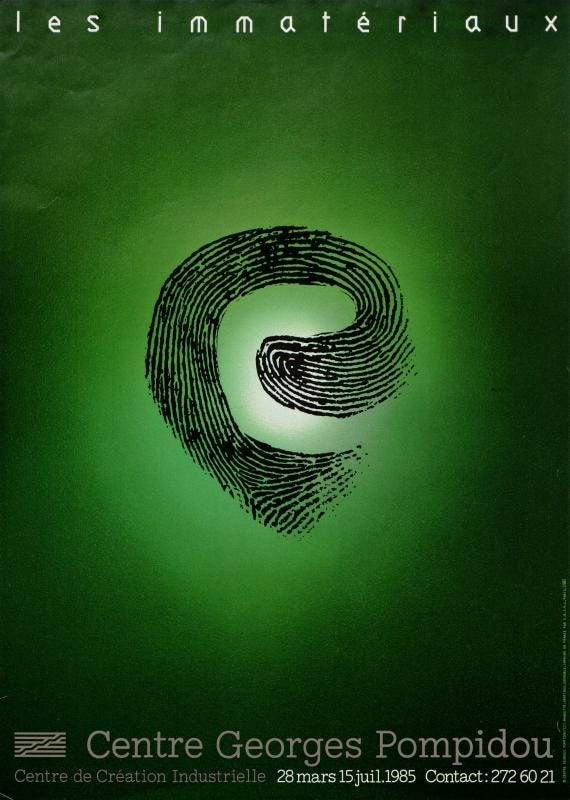
10. Les Immatériaux — Paris, March - July 1985
Venue: Centre Georges Pompidou, Paris
Curators: Jean-François Lyotard (philosopher), Thierry Chaput
Artists: 61 artists/groups including Nam June Paik, Dan Graham, Peter Weibel, interactive computer installations
What Made It Historic: Jean-François Lyotard’s philosophical exhibition about immateriality, information, and postmodern condition. It used interactive computer installations not as demonstrations but as philosophical arguments about materiality, presence, and experience.
The exhibition was famously difficult—visitors wore wireless headsets with different audio channels, navigation was intentionally disorienting. It positioned computer/electronic art within postmodern theory rather than technological progress narratives.
Why It Mattered to the Market: Connected computer art to broader art historical conversations (postmodernism, conceptualism, institutional critique). Demonstrated that computational work could be intellectually ambitious, not just technically clever. Influenced how museums framed digital acquisitions.
Current Impact: Artists from this exhibition command strong prices because they’re positioned within broader art history, not ghettoized as “computer art.” The Lyotard/Pompidou validation matters to serious collectors.
---
Why These Ten Exhibitions Matter for Collectors
1. Provenance is everything
Works shown at these exhibitions have documented historical importance. When building a collection, exhibition history from this list adds substantial value and institutional interest.
2. They define the canon
Artists repeatedly appearing across these exhibitions are the field’s core figures: Nake, Nees, Molnár, Bonačić, Franke, Csuri, Mohr, and the GAIV collective. If you’re collecting computer art, you need to know this roster.
3. They show market inefficiencies
Artists prominent in Tendencies 4, Galerie Weiller/GAIV, or Venice Biennale 1970 but underrepresented in Anglo-American narratives (like Bonačić, Franke’s early work, or the GAIV artists) remain undervalued. Knowing exhibition history helps identify opportunities.
4. They establish technical standards
These exhibitions show what “important” computer art looks like technically. Not all plotter drawings are equal—understanding what made Stuttgart 1965, GAIV’s color work, or Cybernetic Serendipity significant helps evaluate contemporary offerings.
5. They predict future acquisitions
Museums building digital art collections reference these exhibitions. If you collect artists from this canon before institutions complete their holdings, you’ll have material they want.
6. They show what didn’t survive
Many works from these exhibitions no longer exist—installations dismantled, tapes degraded, hardware obsolete. Documentation (catalogues, photographs, preparatory sketches) from these shows has its own market value.
7. They created markets
The gallery system didn’t know how to handle computer art until exhibitions like these demonstrated it could be shown, discussed, and sold. Understanding this history helps predict how emerging computational practices might develop markets.
8. They reveal curatorial priorities
Notice what’s included/excluded: representational work often absent, focus on abstract/systematic aesthetics. This shaped what got preserved and what markets value. Knowing curatorial biases helps identify overlooked areas.
---
The Exhibitions That Didn’t Make the List (And Why)
Computer-Generated Pictures (April 1965, Howard Wise Gallery, New York) — First computer art exhibition in the United States (A. Michael Noll and Béla Julesz from Bell Labs), but limited commercial and critical impact; no works sold and minimal press coverage. Artists appeared in more influential exhibitions later.
Some More Beginnings (1968, Brooklyn Museum)— Important for video/electronic art but less focused on computer art specifically.
Electra(1983, Musée d’Art Moderne de la Ville de Paris) — Major electronic art exhibition but computer art was one section among many.
Digital Salon (various years, School of Visual Arts, NYC) — Important ongoing series but individual editions less historically decisive.
New Tendencies 5 (1973, Zagreb) — Major GAIV participation, but T4 (1968-69) was the more historically pivotal computer art exhibition.
Coded: Art Enters the Computer Age, 1952-1982 (2023, LACMA) — Too recent to assess lasting market impact, though likely will be important.
---
What This Means for Collecting Now
If you’re building a computer art collection, ask these questions about any work:
1. Does the artist appear in multiple exhibitions from this list? If yes, that’s canonical status.
2. Can the work be connected to one of these exhibitions? Direct exhibition history adds value. Works from the same period/style as exhibited pieces benefit from association.
3. Which exhibitions are missing from market narratives? GAIV/Galerie Weiller, French computer art generally, and early Herbert W. Franke remain undervalued relative to Cybernetic Serendipity. Tendencies 4 works remain opportunities. That’s where smart money should look.
4. What formats did these exhibitions validate? Plotter drawings, oscilloscope photographs, computer-generated prints, color computer graphics, algorithmic serigraphs. These are established, collectible formats. Newer formats (NFTs, screen-based work) don’t yet have equivalent institutional consensus.
5. Who curated these exhibitions? Max Bense, Jasia Reichardt, Jack Burnham, Pierre Gaudibert, Jean-François Lyotard, Herbert W. Franke shaped what computer art means. Their theoretical frameworks still influence institutional acquisitions.
Understanding exhibition history isn’t about memorizing dates—it’s about recognizing what makes computational work historically important versus merely technically interesting. The market follows institutions, and institutions follow the canon these exhibitions established.